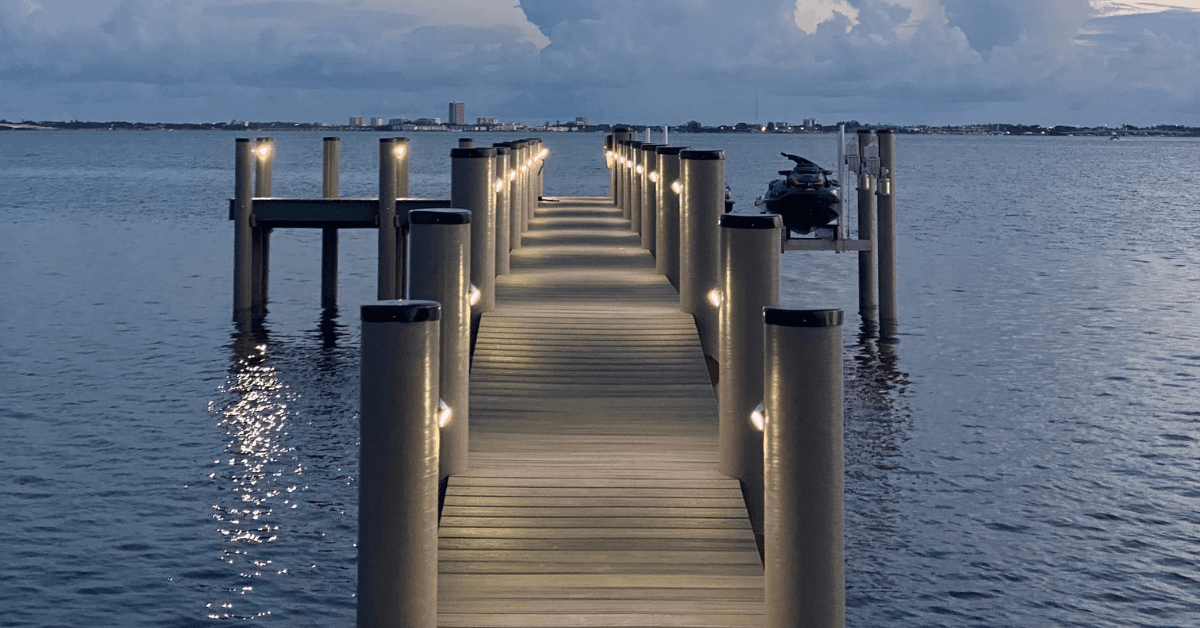

A dock is one of the most significant investments a waterfront homeowner can make. When properly designed and constructed, a dock can provide decades of enjoyment while protecting boats, enhancing property value, and creating a seamless connection to the water.
Unfortunately, not all docks are built to the same standards. Over the years, we’ve seen countless examples of waterfront structures that developed problems prematurely—not because of age, but because of mistakes made during design, permitting, material selection, or construction.
Many of these issues could have been avoided with proper planning and experienced marine construction practices. Here are some of the most common dock failures we encounter and why they matter.
Poor Foundation and Piling Installation
Every dock is only as strong as the foundation beneath it.
One of the most common issues we see involves improperly installed pilings. Whether pilings were not driven deep enough, spaced incorrectly, or installed without considering site-specific soil conditions, foundation problems can affect the entire structure.
Warning signs may include:
- Excessive dock movement
- Uneven decking
- Structural shifting
- Premature settlement
When foundation issues occur, repairs are often more complex and expensive than addressing the problem correctly during initial construction.
Choosing Materials That Aren’t Built for the Marine Environment
South Florida’s waterfront conditions are unforgiving. Salt air, UV exposure, humidity, storms, and constant moisture can quickly expose weaknesses in low-quality materials.
We’ve seen docks constructed with materials that may perform adequately in residential settings but deteriorate rapidly along the waterfront.
According to the National Association of Corrosion Engineers (NACE), corrosion-related damage costs billions of dollars annually across infrastructure sectors, with marine environments among the most aggressive conditions for material degradation.
Using marine-grade hardware, properly treated materials, and products designed specifically for waterfront applications can significantly impact long-term performance.
Ignoring Future Boat Lift and Vessel Requirements
Many homeowners build a dock around their current needs without considering future plans.
A dock designed for today’s vessel may not accommodate a larger boat, upgraded lift system, or changing lifestyle down the road. We’ve seen situations where homeowners were forced to make costly modifications because the original dock wasn’t designed with flexibility in mind.
Common oversights include:
- Insufficient lift capacity planning
- Limited vessel clearance
- Poor dock layout for maneuverability
- Inadequate structural support for future upgrades
A thoughtful design process considers both present and future waterfront goals.
Overlooking Water Flow and Site Conditions
No two waterfront properties are exactly alike.
Water depth, tidal fluctuations, wave action, currents, shoreline conditions, and vessel traffic all influence how a dock should be designed and constructed. Unfortunately, some projects rely on generic designs rather than solutions tailored to the specific property.
Ignoring these factors can contribute to accelerated wear, structural stress, and unnecessary maintenance issues. Successful dock construction starts with understanding the environment in which the structure will operate.
Failing to Prioritize Proper Permitting and Compliance
One of the most costly mistakes homeowners can encounter isn’t always visible.
Marine construction projects often require permitting and regulatory approvals before work begins. Failure to comply with local, state, or environmental requirements can result in project delays, costly modifications, fines, or challenges during future property transactions.
An experienced marine contractor understands how to navigate the permitting process while designing projects that align with applicable regulations.
Proper planning at the beginning helps avoid significant headaches later.
Focusing on Price Instead of Long-Term Value
It’s understandable for homeowners to compare project costs. However, the lowest bid is not always the best value.
Many dock failures can be traced back to shortcuts taken during construction, lower-quality materials, or inadequate design considerations intended to reduce upfront costs.
A dock should be viewed as a long-term investment—not simply a short-term expense.
Building It Right the First Time
The best dock projects are the result of thoughtful design, quality materials, proper engineering, and experienced craftsmanship. While many construction mistakes remain hidden initially, they often become apparent over time through increased maintenance, reduced performance, and costly repairs.
At Bay & Key Designs, we believe waterfront structures should be built to perform for decades, not just pass inspection on day one. By focusing on quality construction practices, premium materials, and site-specific solutions, we help South Florida homeowners create docks that are beautiful, functional, and built to withstand the demands of life on the water.